MARINO PH
Your Maritime Digital Hub

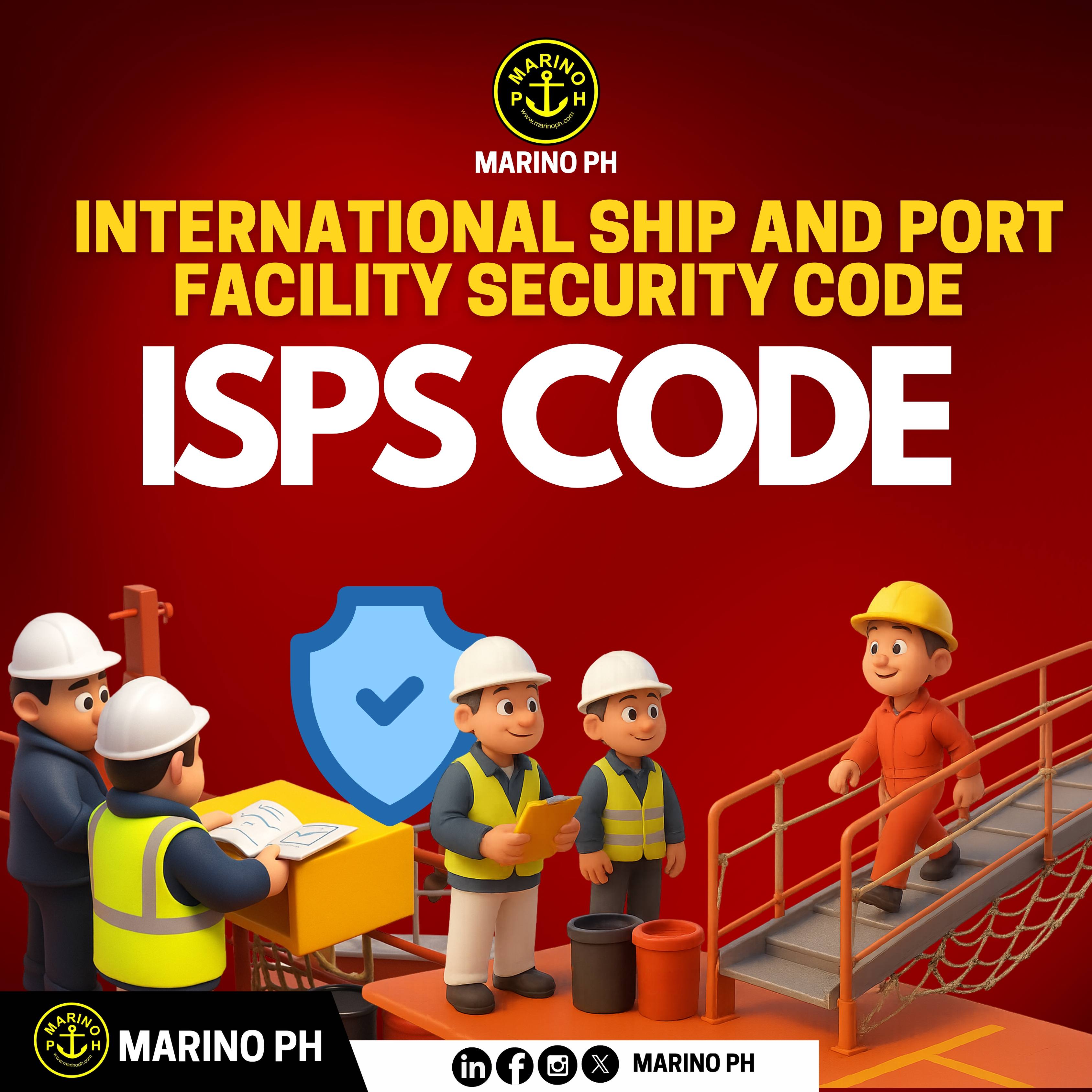
The International Ship and Port Facility Security (ISPS) Code is a global maritime security framework developed by the International Maritime Organization (IMO) to enhance the safety of ships and port facilities. It was introduced in response to growing concerns over terrorism, piracy, and unlawful acts against the maritime sector, particularly after the September 11, 2001 attacks. The ISPS Code entered into force on 1 July 2004 under the Safety of Life at Sea (SOLAS) Convention, Chapter XI-2.
The primary objective of the ISPS Code is to detect security threats and implement preventive measures involving ships, ports, and governments. It establishes clear roles and responsibilities for Contracting Governments, shipping companies, shipboard personnel, and port authorities. Key requirements include conducting security assessments, developing and maintaining approved security plans, and appointing designated security officers such as the Company Security Officer (CSO), Ship Security Officer (SSO), and Port Facility Security Officer (PFSO).
The ISPS Code operates under three security levels. Security Level 1 is the normal level, where minimum appropriate protective measures are maintained at all times. This includes routine access control, monitoring of restricted areas, and regular security patrols. Security Level 2 is applied when there is a heightened risk of a security incident. At this level, additional protective measures are implemented, such as increased patrols, stricter access controls, limited visitors, and closer monitoring of cargo and ship’s stores. Security Level 3 represents an exceptional level, activated when a security incident is probable or imminent. At this stage, specific protective actions are taken for a limited period, which may include suspension of operations, evacuation procedures, or direct coordination with authorities to protect the ship, port facility, and personnel.
