MARINO PH
Your Maritime Digital Hub

Methods of Fire Extinguishment
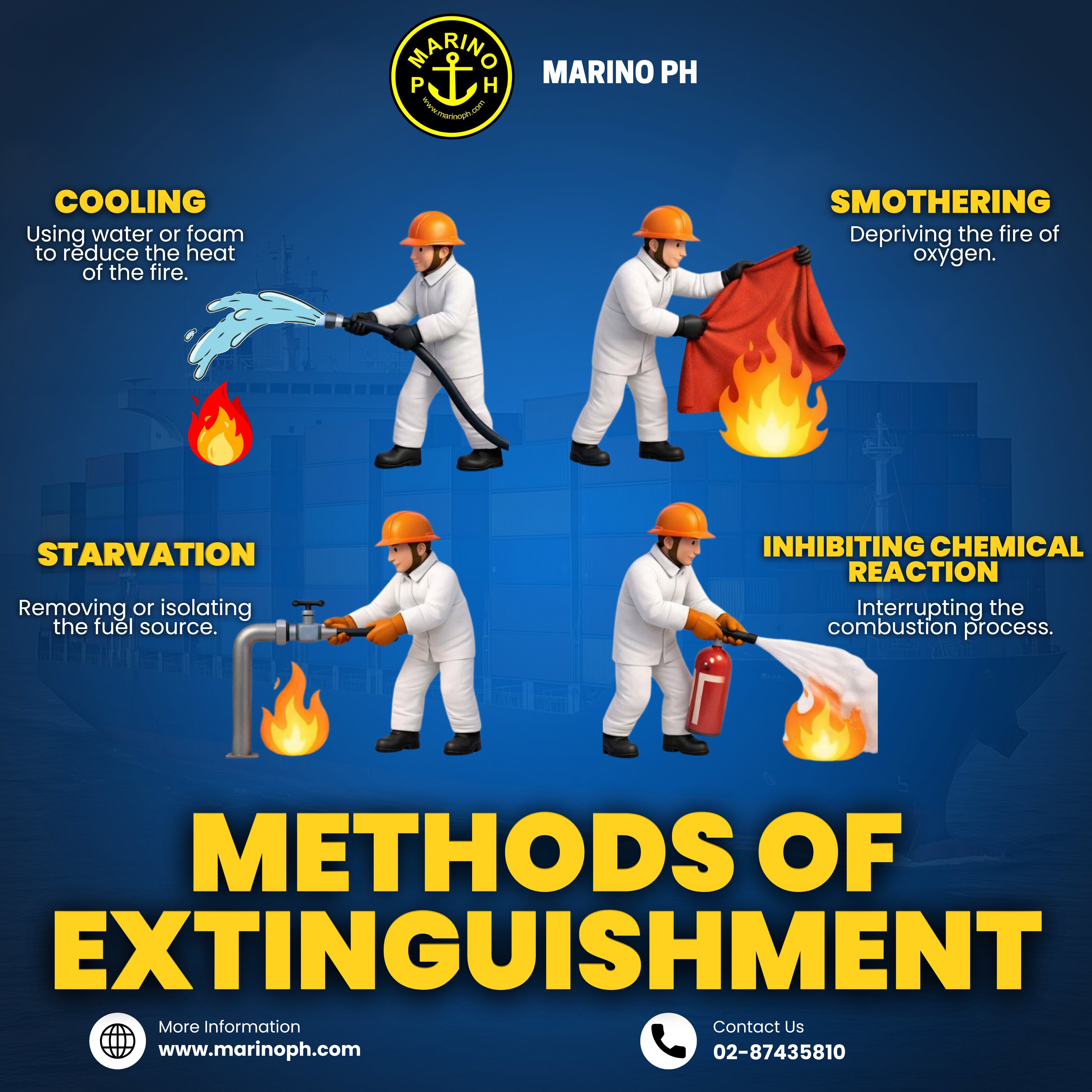
Fire remains one of the most serious hazards on board ships and offshore installations. Effective firefighting depends on understanding the fire tetrahedron heat, fuel, oxygen, and the chemical chain reaction. By removing or interrupting any of these elements, a fire can be controlled and extinguished. Below are the four primary methods of fire extinguishment used in maritime operations.
1. Cooling
Cooling reduces the temperature of the burning material below its ignition point. Water is the most commonly used cooling agent because of its high heat-absorbing capacity. When applied properly, water removes heat from the fire and surrounding surfaces, preventing re-ignition. Foam may also provide a cooling effect while offering additional smothering benefits. Cooling is particularly effective for Class A fires involving solid combustibles such as wood, paper, and textiles.
2. Smothering
Smothering works by cutting off the oxygen supply required to sustain combustion. This can be achieved using foam, COâ‚‚, fire blankets, or fixed fire suppression systems. By creating a barrier between the fire and the surrounding air, smothering suppresses flame spread and prevents further combustion. This method is commonly used for liquid fires and enclosed space incidents on board vessels.

ADVERTISMENT
3. Starvation
Starvation involves removing or isolating the fuel source feeding the fire. On ships, this may include shutting off fuel valves, isolating electrical supplies, or removing combustible materials from the affected area. By eliminating the fuel component, the fire cannot continue to burn. Quick identification and isolation of the fuel source are critical to successfully applying this method.
4. Inhibiting the Chemical Reaction
This method interrupts the chemical chain reaction occurring within the flame. Dry chemical powders and certain clean agent extinguishers are designed specifically for this purpose. They stop the combustion process at a molecular level, making them highly effective for flammable liquid, gas, and electrical fires. Rapid application ensures that the chain reaction is broken before the fire escalates.
The Importance of Proper Firefighting Knowledge
Understanding these four methods allows seafarers and offshore personnel to respond effectively during emergencies. Proper training, routine drills, and familiarity with onboard firefighting equipment are essential to ensuring safety at sea.
