MARINO PH
Your Maritime Digital Hub

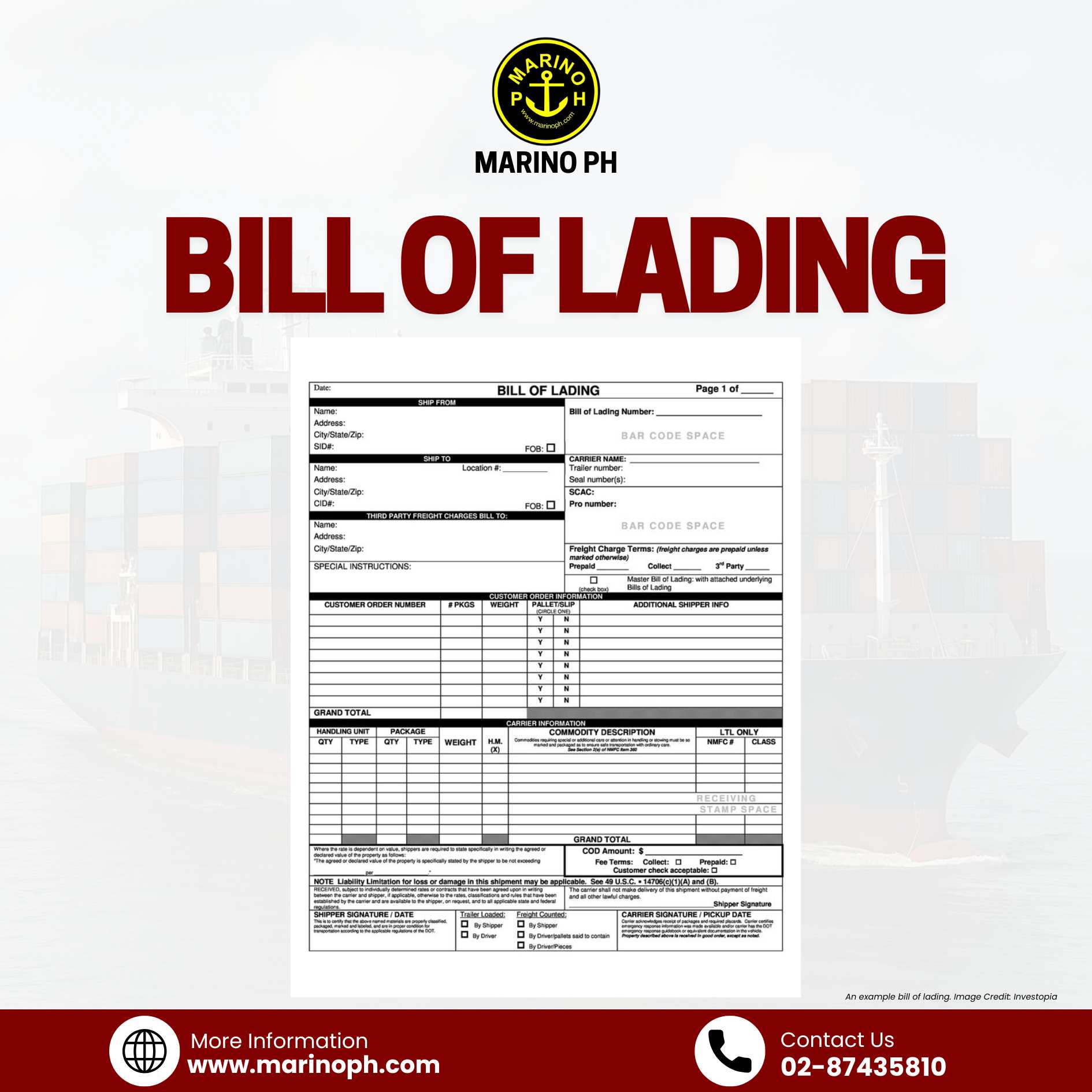
A Bill of Lading (B/L) is one of the most important documents in shipping. It is issued by the carrier to the shipper as proof that goods have been received for transport. It serves as a receipt, a contract of carriage, and a document of title, allowing the holder to claim the cargo at the destination port.
Common Types of Bill of Lading
Straight B/L – Non-negotiable, goods go only to a named consignee
Order B/L – Negotiable, can be transferred to another party
Bearer B/L – Whoever holds it can claim the cargo

ADVERTISEMENT
-Straight B/L
A non-negotiable document where the cargo is delivered only to the named consignee. It cannot be transferred to another party, providing more control and security over the shipment and ensuring the goods reach the intended receiver without endorsement.
-Order B/L
A negotiable document that allows transfer of ownership through endorsement. The consignee can endorse it to another party, making it widely used in trade and financing, especially in transactions involving banks and letters of credit.
-Bearer B/L
A highly negotiable document where possession equals ownership. Whoever holds the original Bill of Lading can claim the cargo, making it flexible but also risky if lost or misplaced
