
MARINO PH
Your Maritime Digital Hub

Flame Arrestors and Their Role in Industrial Safety
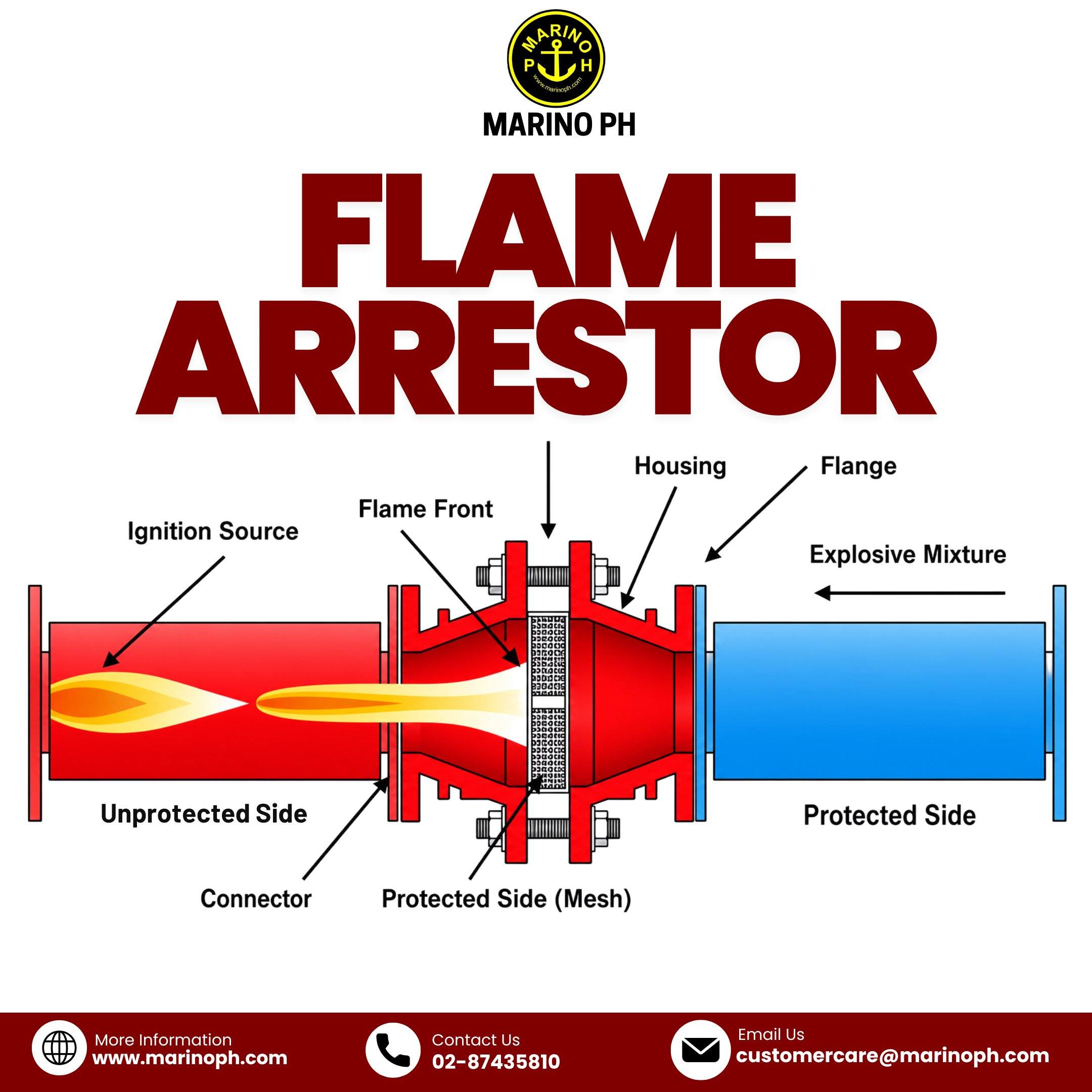
A flame arrestor is a critical safety device designed to stop flames from spreading through pipelines, storage tanks, ventilation systems, and industrial equipment that handle flammable gases or vapors. Commonly used in marine, oil and gas, chemical, and manufacturing industries, flame arrestors help prevent explosions and protect both personnel and equipment from catastrophic accidents.
The device works by allowing gases or vapors to pass through a specially designed metal mesh or element while preventing a flame front from continuing to the protected side of the system. When an ignition source causes combustion on one side, the flame enters the flame arrestor and encounters the internal mesh structure. This element absorbs and dissipates heat rapidly, cooling the flame below the temperature required for combustion. As a result, the flame is extinguished before it can travel further into the system.

ADVERTISMENT
A typical flame arrestor consists of several key components, including the housing, flange connections, connector sections, and the flame-quenching mesh element. The unprotected side is where ignition may occur, while the protected side contains the flammable mixture or sensitive equipment that must remain safe from ignition. Proper installation and regular maintenance are essential to ensure the device performs effectively during emergency situations.
Flame arrestors are available in different types depending on the application, such as inline flame arrestors and end-of-line flame arrestors. Each design is engineered to meet specific operational requirements, including pressure, temperature, and flow conditions.
