
MARINO PH
Your Maritime Digital Hub

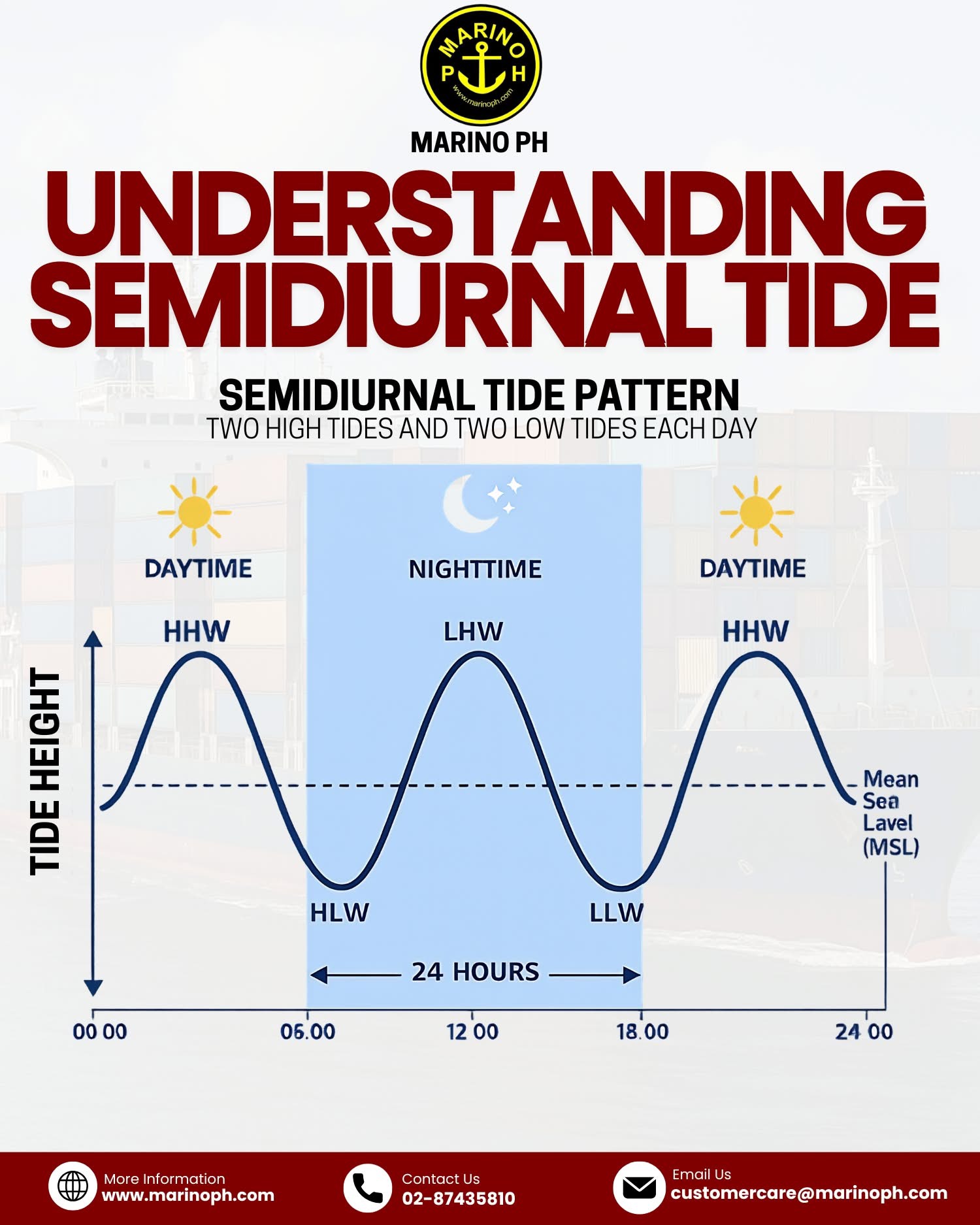
A semidiurnal tide is a tidal pattern in which two high tides and two low tides occur each day, with relatively equal heights and intervals. This means coastal areas experiencing semidiurnal tides will typically have a high tide every 12 hours and 25 minutes, followed by a low tide in between. It is the most common tidal pattern observed around the world, especially along the Atlantic coasts of North America and Europe.
Semidiurnal tides are caused primarily by the gravitational pull of the Moon and the Sun on Earth’s oceans. As the Earth rotates, ocean waters are pulled toward the Moon, creating tidal bulges. Areas passing through these bulges experience high tides, while areas between them experience low tides. The Sun’s gravity also influences tides, either strengthening or weakening them depending on the alignment of the Earth, Moon, and Sun.

ADVERTISEMENT
Understanding semidiurnal tides is important in maritime navigation, fishing, coastal construction, and port operations. Mariners rely on tide schedules to ensure safe passage through shallow waters and harbors. Fishermen also consider tidal movements because changing water levels affect fish behavior and feeding patterns. By studying semidiurnal tides, coastal communities can better prepare for flooding, erosion, and other ocean-related activities.
