
MARINO PH
Your Maritime Digital Hub

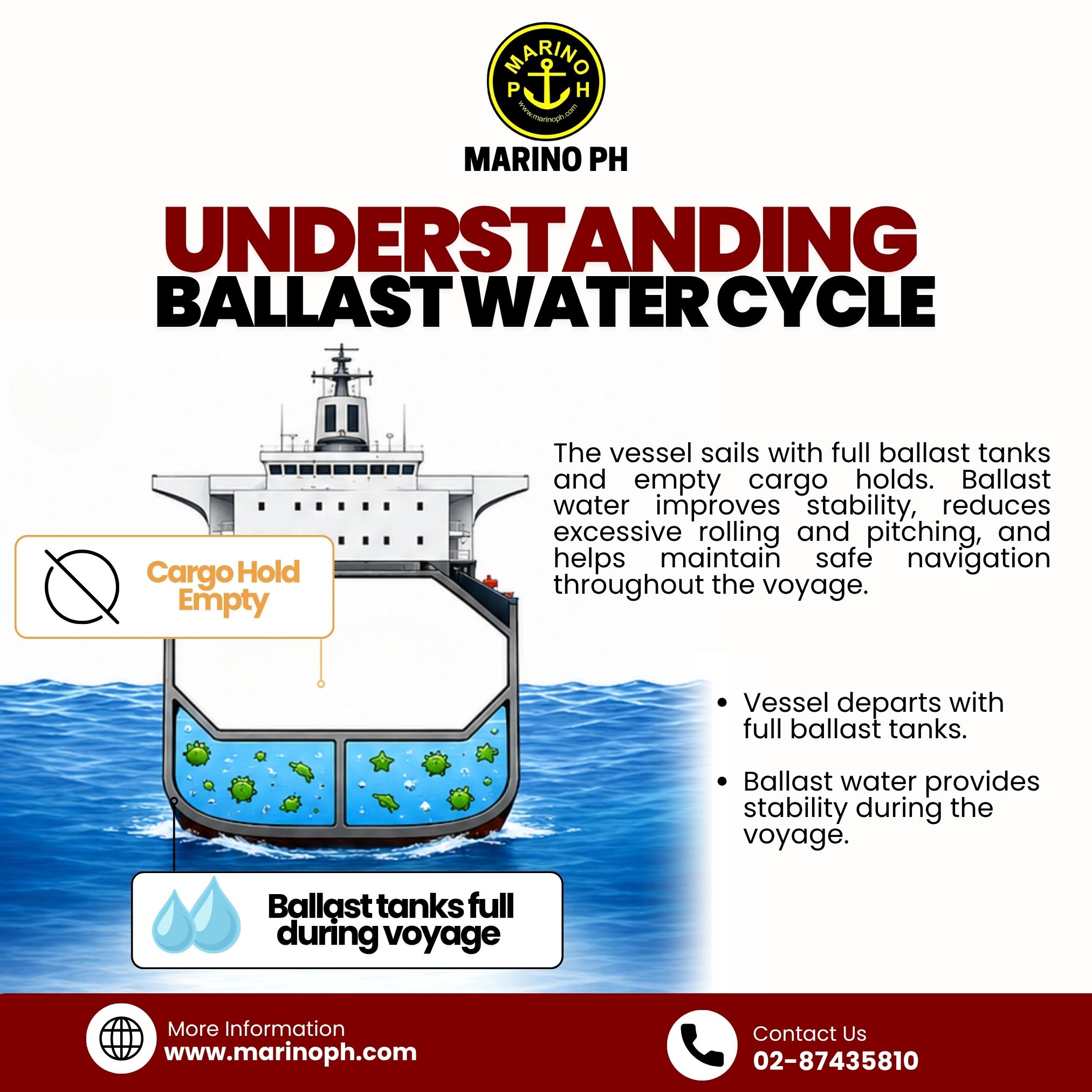
Ballast water is essential for maintaining a vessel\'s stability, trim, draft, and safe navigation. The ballast water cycle continuously changes depending on whether a ship is carrying cargo or sailing in ballast condition. Below is a step-by-step explanation of the process.
1. Ballast Voyage – Cargo Holds Empty
When a vessel sails without cargo, it becomes lighter and less stable. To compensate, seawater is pumped into ballast tanks located at the bottom and sides of the ship.
What happens:
-Cargo holds are empty.
-Ballast tanks are filled with seawater.
-The additional weight improves stability and reduces excessive rolling and pitching.
-The vessel safely travels to the loading port.
Purpose: To maintain proper draft, trim, and stability while the ship is not carrying cargo.
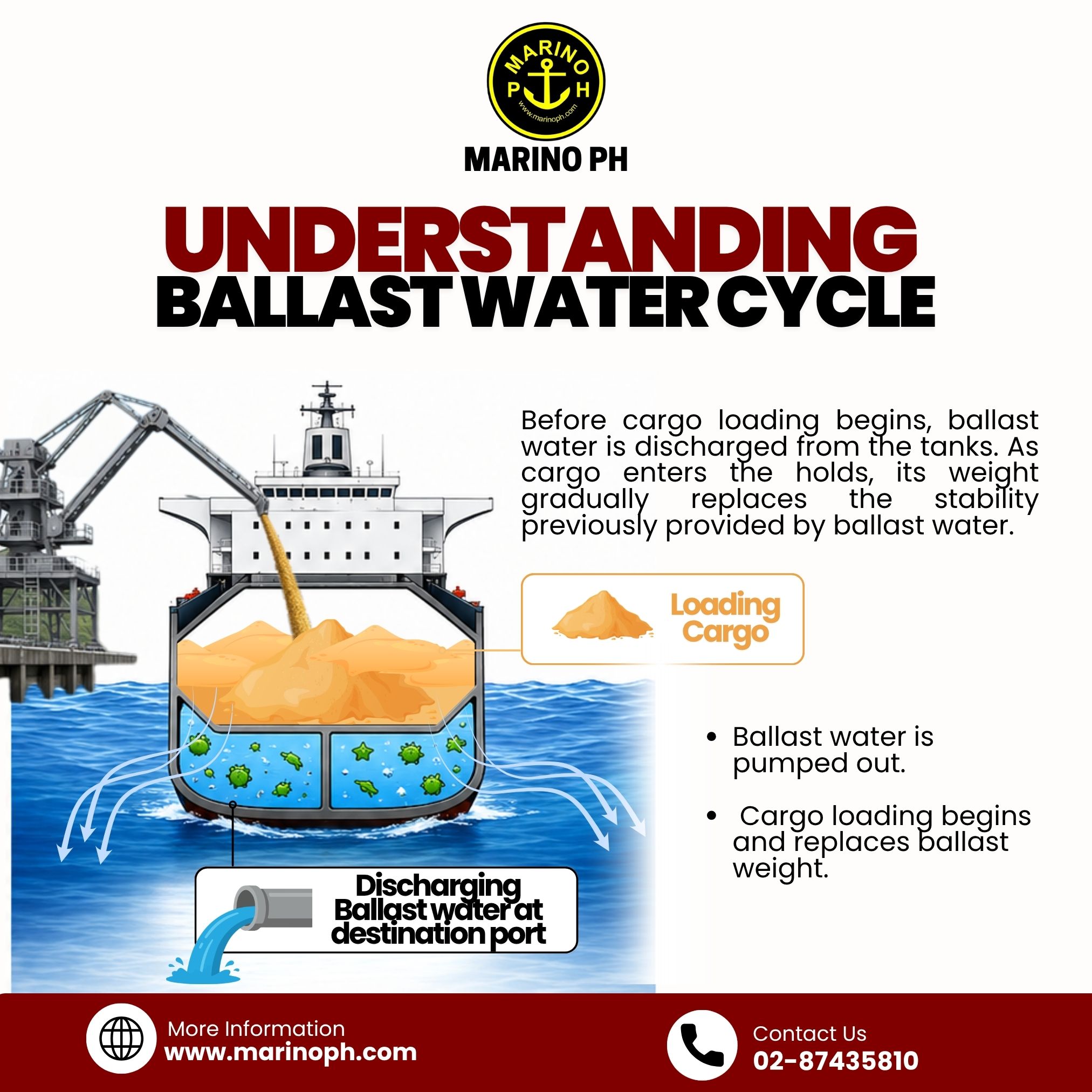
2. Cargo Loading – Ballast Water Discharge
Upon arrival at the loading port, cargo operations begin. As cargo is loaded into the holds, ballast water is gradually discharged overboard or managed according to ballast water regulations.
What happens:
Ballast water is pumped out of the tanks.
Cargo is loaded into the cargo holds.
Cargo weight gradually replaces the stability previously provided by ballast water.
The vessel remains balanced throughout loading operations.
Purpose: To create space for cargo weight while maintaining safe vessel stability.
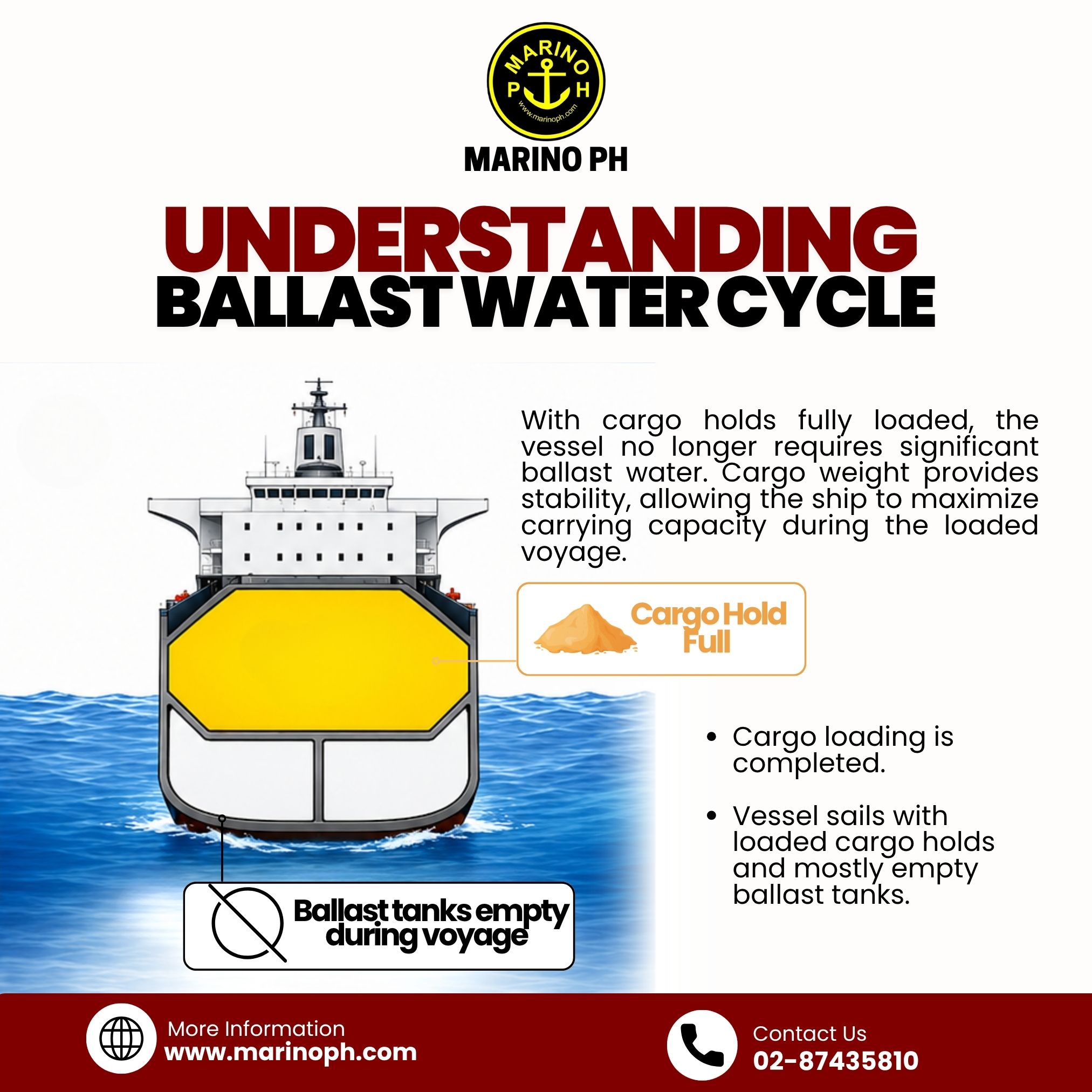
3. Loaded Voyage – Cargo Holds Full
After loading is completed, the vessel departs with full cargo holds. Since the cargo already provides significant weight, little or no ballast water is required.
What happens:
-Cargo holds are fully loaded.
-Ballast tanks are mostly empty.
-Cargo weight provides stability and proper draft.
-The vessel maximizes cargo-carrying capacity during the voyage.
Purpose: To transport cargo efficiently while maintaining safe operating conditions
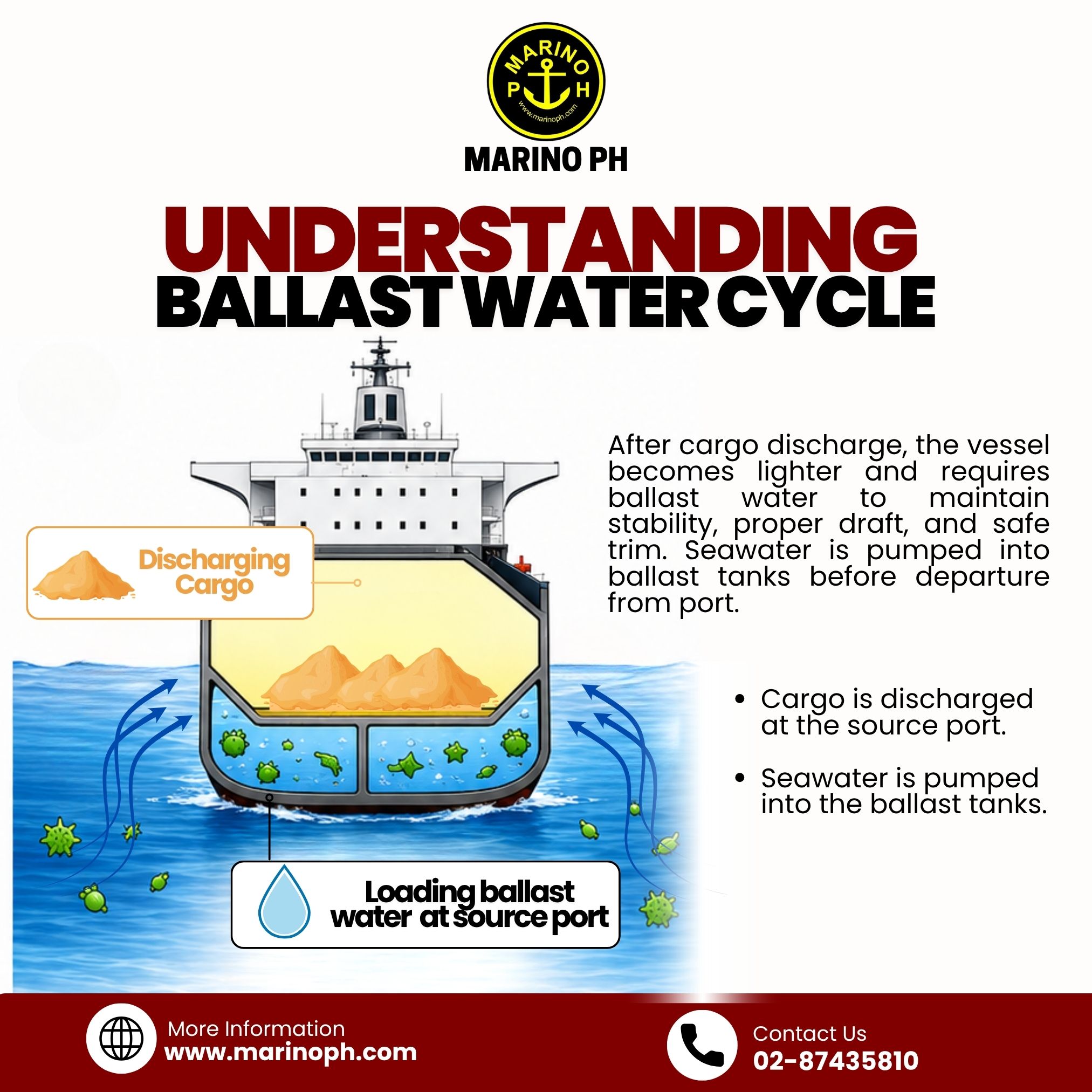
4. Cargo Discharge – Ballast Water Intake
When the vessel reaches the discharge port and cargo is unloaded, the ship becomes lighter. To restore stability, seawater is pumped back into the ballast tanks.
What happens:
-Cargo is discharged from the holds.
-Ballast water is loaded into the ballast tanks.
-Stability, trim, and draft are restored.
-The vessel prepares for its next voyage.
Purpose: To ensure safe navigation after cargo has been discharged.

ADVERTISEMENT
Importance of Ballast Water Management
While ballast water is essential for ship safety, it may contain marine organisms, bacteria, and microorganisms from one region. If discharged in another location, these organisms can affect local ecosystems. For this reason, ships must comply with the International Maritime Organization (IMO) Ballast Water Management Convention, which requires ballast water treatment and management procedures to help prevent the spread of invasive aquatic species.
