MARINO PH
Your Maritime Digital Hub

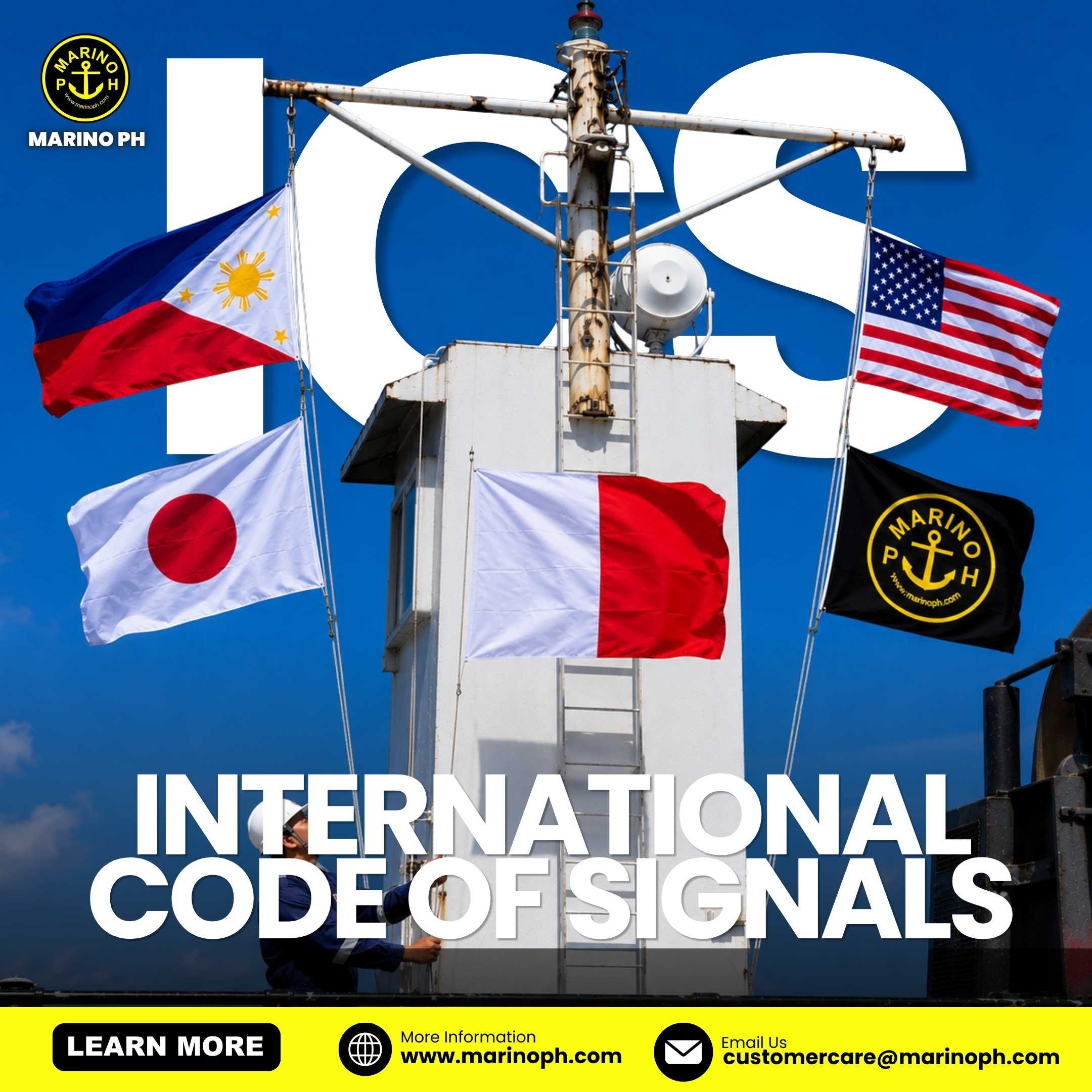
The International Code of Signals (ICS) is a standardized maritime communication system used by ships worldwide to exchange important information regardless of language. It uses signal flags, Morse code, and radio communications to ensure clear, safe, and effective communication between vessels and shore stations.

LETTER SIGNALS
Alpha (A) – Diver below (when stationary); I am undergoing a speed trial.
Bravo (B) – I am taking on or discharging explosives.
Charlie (C) – Affirmative.
Delta (D) – Keep clear of me, I am manoeuvring with difficulty.
Echo (E) – I am altering my course to starboard.
Foxtrot (F) – I am disabled; communicate with me.
Golf (G) – I require a pilot.
Hotel (H) – I have a pilot on board.
India (I) – I am altering my course to port.
Juliet (J) – I am going to send a message by semaphore.
Kilo (K) – You should stop your vessel instantly.
Lima (L) – You should stop; I have something important to communicate.
Mike (M) – I have a doctor on board.
November (N) – No (negative).
Oscar (O) – Man overboard.
Papa (P) –
* In port: All aboard; vessel is about to proceed to sea.
* At sea: Your lights are out or burning badly.
Quebec (Q) – My vessel is healthy and I request free pratique.
Romeo (R) – The way is off my ship. You may feel your way past me.
Sierra (S) – My engines are going full speed astern.
Tango (T) – Do not pass ahead of me.
Uniform (U) – You are standing into danger.
Victor (V) – I require assistance (not distress).
Whiskey (W) – I require medical assistance.
X-ray (X) – Stop carrying out your intentions and watch for my signals.
Yankee (Y) – I am dragging my anchor.
Zulu (Z) – I require a tug.
