MARINO PH
Your Maritime Digital Hub

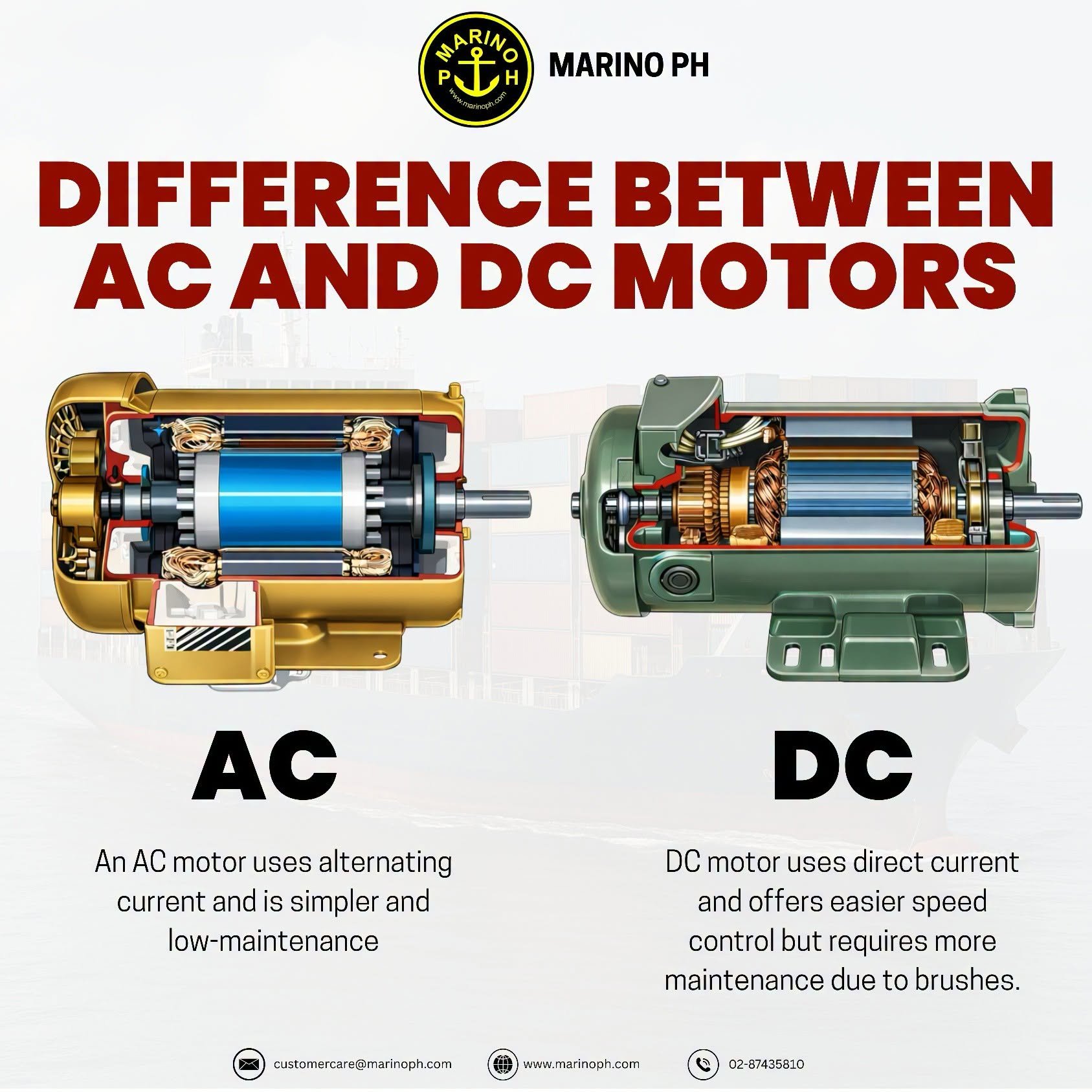
The image compares the basic construction and components of AC and DC motors. Both motors convert electrical energy into mechanical energy, producing rotational motion that can be used to operate different types of machinery and equipment.
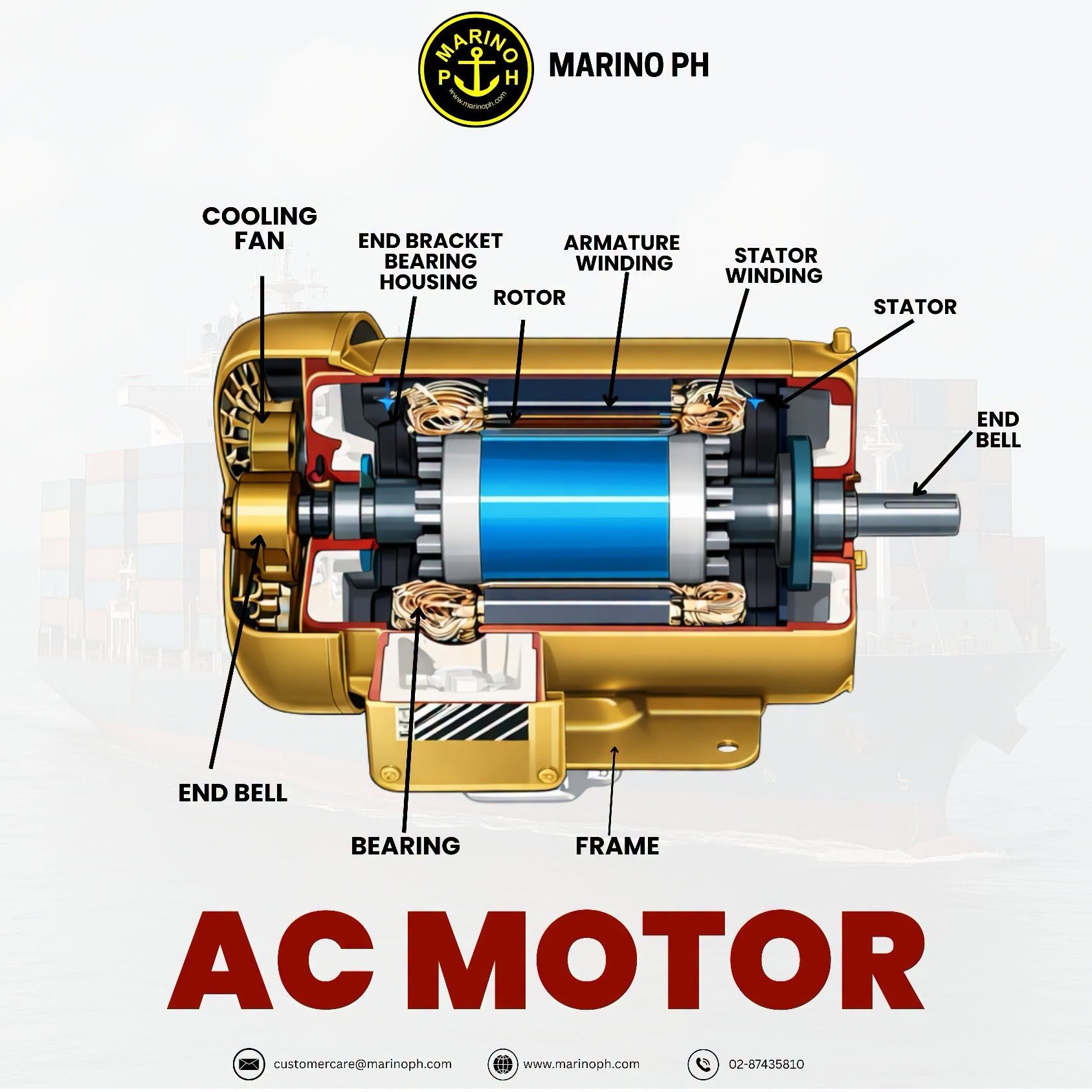
The AC motor operates using alternating current and consists of major components such as the stator, rotor, stator winding, armature winding, bearings, frame, cooling fan, and end bells. Its relatively simple and robust construction makes it suitable for continuous operation.

ADVERTISEMENT
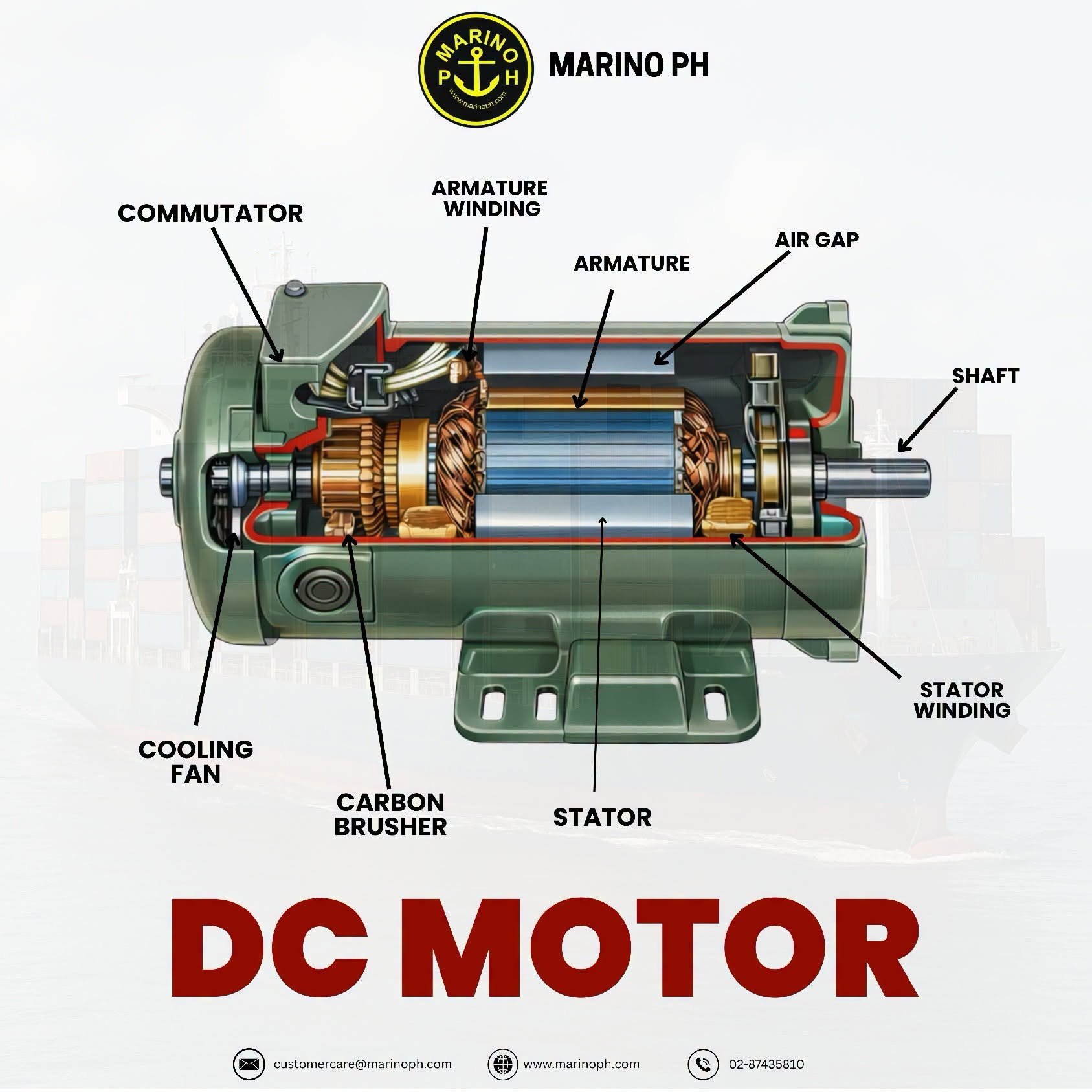
The DC motor operates using direct current and includes components such as the armature, armature winding, stator winding, commutator, carbon brushes, shaft, air gap, and cooling fan. The commutator and carbon brushes are distinctive components that help control the flow of electrical current to the rotating armature.
Both AC and DC motors are important in industrial and marine applications. AC motors are commonly used for pumps, fans, compressors, and other continuously running machinery, while DC motors are useful where high starting torque and precise speed control are required.
