
MARINO PH
Your Maritime Digital Hub

The Beaufort Scale is a system used to measure and describe wind strength from 0 to 12. For seafarers, it is important because wind conditions directly affect the sea state, vessel movement, and safety of navigation. By understanding the scale, seafarers can assess weather conditions and anticipate changes while at sea.
The Beaufort Scale helps captains and crew members make informed decisions about navigation, cargo operations, and safety. Strong winds can create rough seas, high waves, and dangerous working conditions. Therefore, knowing the Beaufort number helps seafarers prepare for bad weather, avoid unnecessary risks, and protect the vessel, cargo, and crew.
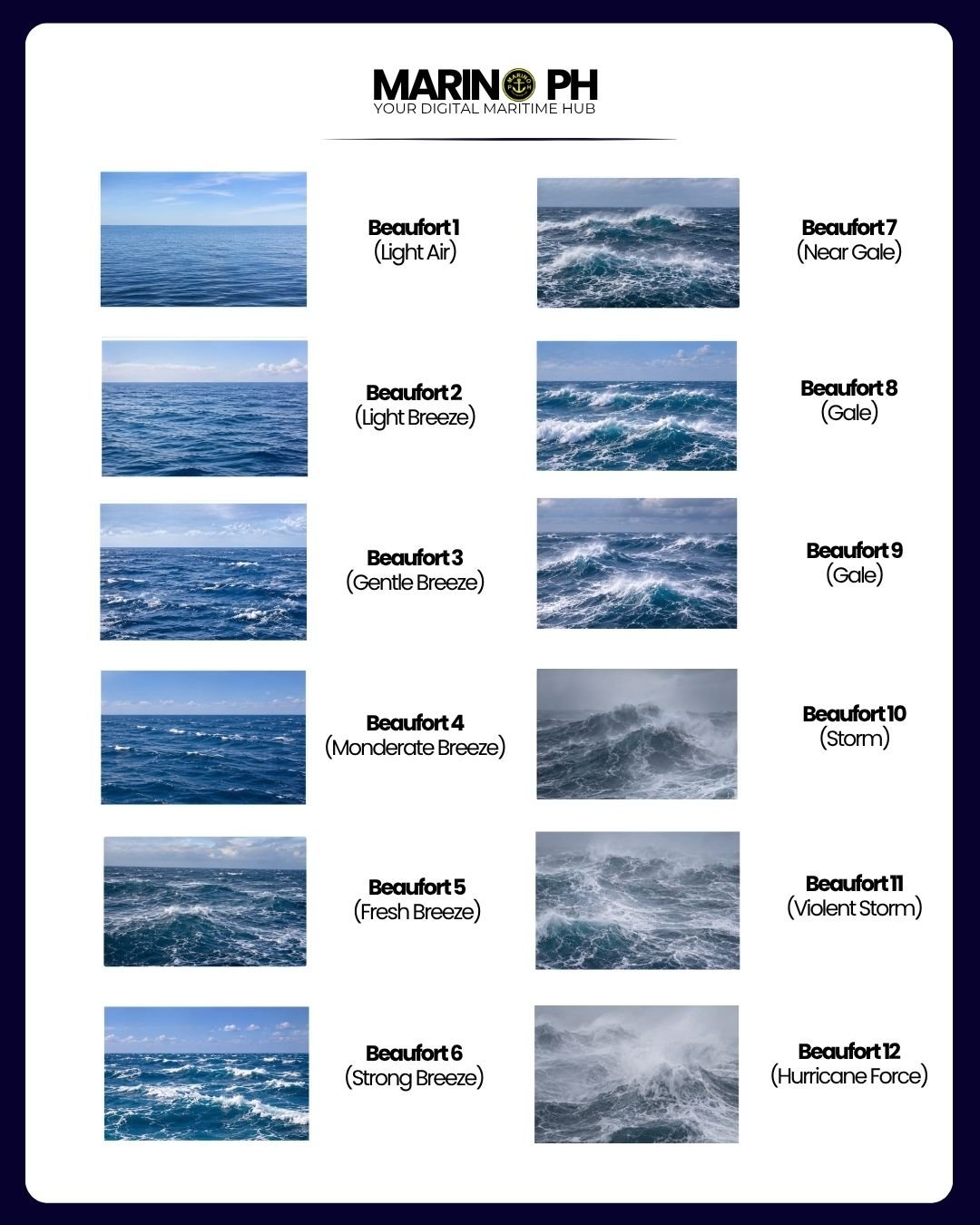
Beaufort 0 – Calm
Wind speed: Less than 1 km/h
The sea is calm and smooth, with a mirror-like surface and little to no wave movement.
Beaufort 1 – Light Air
Wind speed: 1–5 km/h
The sea begins to show small ripples, but there are no significant waves or whitecaps.
Beaufort 2 – Light Breeze
Wind speed: 6–11 km/h
Small wavelets develop on the sea, and there may be occasional glassy-looking crests without foam.
Beaufort 3 – Gentle Breeze
Wind speed: 12–19 km/h
Large wavelets and small waves become noticeable, with occasional whitecaps appearing on the sea surface.
Beaufort 4 – Moderate Breeze
Wind speed: 20–28 km/h
Small waves become longer and more frequent, with many whitecaps forming across the sea.
Beaufort 5 – Fresh Breeze
Wind speed: 29–38 km/h
Moderate waves develop with numerous whitecaps, and the sea becomes increasingly rough for smaller vessels.
Beaufort 6 – Strong Breeze
Wind speed: 39–49 km/h
Large waves form with frequent whitecaps, and some spray may be present, making navigation more challenging.
Beaufort 7 – High Wind or Near Gale
Wind speed: 50–61 km/h
The sea becomes rough, with larger waves, extensive white foam, and increasing spray caused by the strong wind.
Beaufort 8 – Gale
Wind speed: 62–74 km/h
High and rough waves develop, with widespread foam and spray, making conditions hazardous for smaller vessels.
Beaufort 9 – Strong Gale
Wind speed: 75–88 km/h
Very high waves occur, with dense foam and heavy spray reducing visibility and making navigation difficult.
Beaufort 10 – Storm
Wind speed: 89–102 km/h
The sea becomes very high and dangerous, with very large waves, heavy foam, and reduced visibility due to spray.
Beaufort 11 – Violent Storm
Wind speed: 103–117 km/h
Exceptionally high waves cover the sea with thick foam, while visibility becomes poor and conditions are extremely dangerous for vessels.
Beaufort 12 – Hurricane Force
Wind speed: 118 km/h or higher
The sea is extremely violent, with enormous waves, widespread foam, heavy spray, and severely reduced visibility, creating life-threatening conditions for vessels.

Conclusion:
The Beaufort Scale gives seafarers a clear reference for understanding how wind strength affects sea conditions. As the scale rises, waves, foam, spray, and navigational hazards increase significantly. Recognizing each level helps officers and crew assess weather conditions, prepare the vessel, adjust operations when necessary, and maintain safer navigation during changing or severe weather conditions.
