MARINO PH
Your Maritime Digital Hub

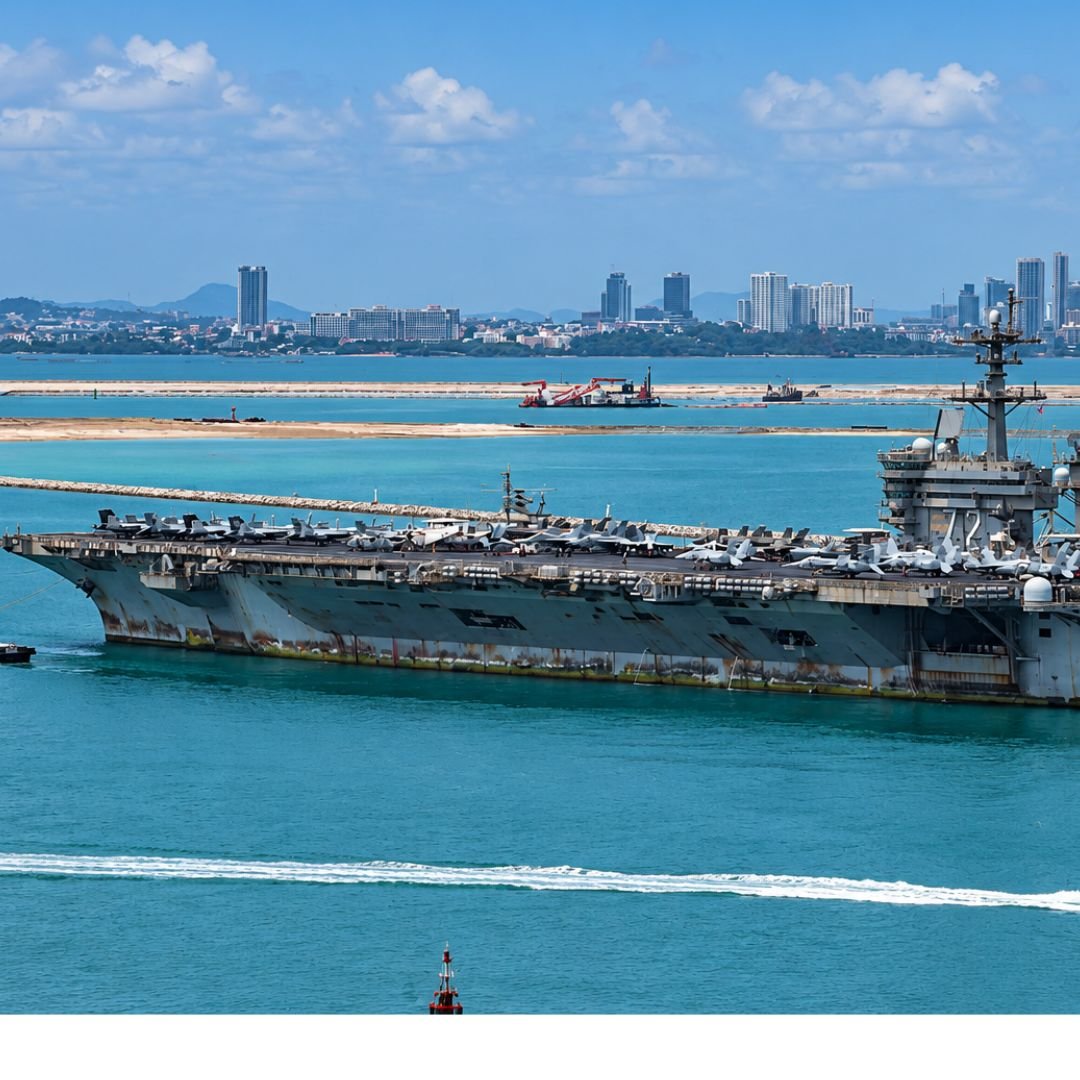
Photo Courtesy: REUTERS/Chalinee Thirasupa
The U.S. Navy’s nuclear-powered aircraft carrier USS Abraham Lincoln arrived at Laem Chabang in eastern Thailand on Wednesday after spending 286 consecutive days at sea. Accompanied by other U.S. naval vessels, the carrier is making a five-day port visit to provide rest and recuperation for approximately 5,000 sailors and Marines following an extended deployment.
The USS Abraham Lincoln has been deployed since November 2025, with much of its mission focused on operations in the Middle East amid the conflict involving Iran. The deployment has extended well beyond the typical six- to nine-month duration of many U.S. Navy deployments. Rear Adm. Robert E. Loughran, commander of Carrier Strike Group 3, described the group’s accomplishments as “truly historic,” while personnel began going ashore for activities in Pattaya following the carrier’s arrival.

The prolonged deployment has also drawn attention to the demands placed on personnel serving aboard the carrier, including reported concerns over crew morale, mental health, and limited communication with families during extended periods at sea. The port call gives sailors and Marines an opportunity to rest after months of sustained operations. The guided-missile destroyer USS Frank E. Petersen Jr. and guided-missile cruiser USS Robert Smalls also arrived at nearby Thai ports.
The visit highlights the longstanding defense relationship between the United States and Thailand, a U.S. treaty ally since 1954. For the maritime sector, the USS Abraham Lincoln’s 286 days at sea also demonstrate the logistical and human demands involved in sustaining a carrier strike group during prolonged deployments, including crew welfare, supplies, maintenance, and operational readiness.
